Few regions on earth carry their past as gracefully as Provence, where Roman aqueducts stand beside medieval abbeys and lavender fields bloom over prehistoric landscapes. Beneath every cobblestone and sun-bleached façade lies a story stretching back millennia, waiting to be discovered.
Long before the Romans arrived, Provence was home to Ligurian tribes who settled its coastal hills and river valleys as far back as the Bronze Age. Around 600 BC, Greek merchants from Phocaea founded Massalia — modern-day Marseille — establishing what would become one of the most important trading ports in the ancient Mediterranean world. This colony introduced the olive tree, the grape vine, and the concept of urban planning to the region, laying the cultural groundwork for everything that followed. Massalia flourished as an independent city-state, minting its own coins and maintaining trade routes that stretched from Spain to the Black Sea.
In 121 BC, Rome intervened militarily to protect Massalia from the Gauls and Celto-Ligurian tribes, seizing the surrounding territory and creating the province of Gallia Transalpina — later simply called Provincia, the direct root of the name Provence. The Romans transformed the region with extraordinary ambition, constructing roads, aqueducts, theaters, and temples that still stand today. The Via Domitia, completed in 118 BC, became the first Roman road in Gaul, slicing through the landscape and connecting Italy to Spain. Cities like Arles, Nîmes, and Orange rose to imperial prominence, endowing Provence with a Roman heritage arguably richer than anywhere outside Italy itself.
After Rome's decline, Provence passed through Visigoth and Frankish hands before becoming part of the Holy Roman Empire, then eventually merging with France in 1481 under Louis XI. Yet through these turbulent centuries, a distinctly Provençal culture took root and flourished. The medieval troubadour tradition, born in the courts of the Counts of Provence during the 11th and 12th centuries, produced the first great lyric poetry in a Romance language. Poets like Guilhem de Peitieu and Raimbaut de Vaqueiras sang of courtly love — fin'amor — in the Occitan language, influencing literary traditions across Europe from Dante's Italy to Chaucer's England.
Religion shaped Provence as profoundly as politics. According to enduring local legend, Mary Magdalene herself arrived on Provençal shores after the Crucifixion, landing at what is now Saintes-Maries-de-la-Mer. Whether myth or history, this tradition made Provence a major pilgrimage destination throughout the Middle Ages. The Abbey of Saint-Victor in Marseille, founded around 415 AD, became one of the earliest and most influential monasteries in the Christian West. The magnificent Cistercian abbeys of Sénanque, Silvacane, and Le Thoronet — the so-called Three Sisters — built between 1148 and 1200, represent Romanesque architecture at its most austere and breathtaking, their silence still profound today.
Avignon's role as the seat of the papacy between 1309 and 1377 thrust Provence onto the world stage with dramatic force. Seven successive popes ruled Christendom from the Palais des Papes — the largest Gothic palace ever built — transforming the city into a cosmopolitan center of art, diplomacy, and ecclesiastical power. Cardinals and ambassadors flooded the city, and artists from across Europe arrived to decorate its walls. Even after the papacy returned to Rome, Avignon and the surrounding Comtat Venaissin remained papal territory until the French Revolution in 1791. This extraordinary chapter left Avignon with monuments and an international self-confidence that still define the city's character.
The French Revolution brought upheaval to Provence as it did everywhere in France, dissolving the old provincial structure in 1790 and dividing the territory into the departments of Bouches-du-Rhône, Var, and Basses-Alpes. Yet the 19th century ushered in a remarkable cultural renaissance. Poet Frédéric Mistral led the Félibrige movement, founded in 1854 at the Château de Font-Ségugne, dedicating his life to preserving the Occitan language and Provençal identity. His epic poem Mirèio, published in 1859, won international acclaim, and in 1904 Mistral was awarded the Nobel Prize in Literature — using his prize money to establish the Museon Arlaten ethnographic museum in Arles.
It was Provence's extraordinary light that would ultimately announce the region to the modern world. Paul Cézanne, born in Aix-en-Provence in 1839, painted Mont Sainte-Victoire more than 80 times, his obsessive study of the mountain's shifting forms revolutionizing Western art and laying the foundations of Cubism. Vincent van Gogh arrived in Arles in February 1888 and, during his fifteen months in Provence, produced over 300 paintings and drawings, including The Sunflowers and The Starry Night. Henri Matisse settled in Nice, Pablo Picasso summered at Vallauris — the region became, quite simply, the cradle of modern art, its landscapes inseparable from the revolutionary canvases they inspired.
The early 20th century also saw Provence emerge as a destination for international elite travelers. The completion of the Paris-Lyon-Méditerranée railway line made the Côte d'Azur accessible to wealthy tourists seeking winter warmth, and writers including F. Scott Fitzgerald, Aldous Huxley, and Virginia Woolf made the region their playground and muse. Peter Mayle's 1989 memoir A Year in Provence introduced a new generation of Anglo-American readers to the pleasures of Luberon village life — its warmth, its markets, its food — triggering a wave of property purchases and literary tourism that continues to this day. Mayle's book sold over six million copies worldwide, reshaping perceptions of rural France entirely.
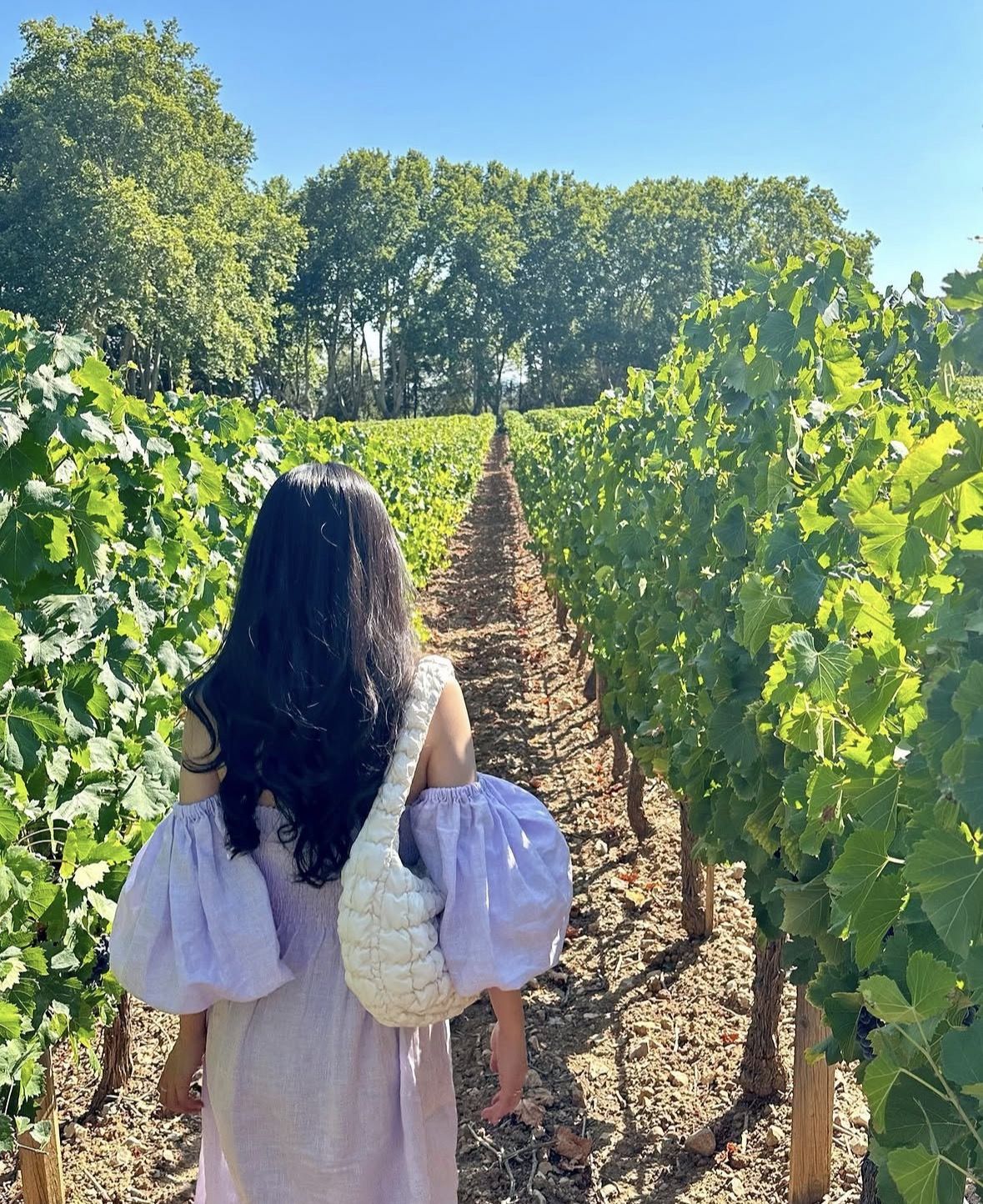
Modern Provence is a region that wears its layered history with effortless ease. Visitors can walk through the 2,000-year-old Roman arena in Arles — still used for bullfighting events — in the morning, browse a weekly outdoor market heaped with olives, cheeses, and tapenade at noon, and sip rosé wine from the Côtes de Provence appellation as the evening light turns the limestone hills golden. The lavender plateau of the Valensole and the gorges of the Verdon, the hill villages of Les Baux-de-Provence and Gordes, the salt flats of the Camargue — each landscape tells a different chapter of the same long, sun-soaked story.
Provence remains one of France's most visited regions, welcoming over 30 million tourists annually, yet its soul remains stubbornly authentic. Local markets, traditional festivals like the Feria d'Arles, the olive harvest in November, and the lavender bloom each July anchor daily life in rhythms older than memory. Whether you come seeking Roman history, Impressionist art, world-class cuisine, or simply the legendary quality of the light, Provence delivers on every promise with a generosity that has seduced travelers for centuries. There has never been a better time to join the long procession of wanderers who have fallen completely, irreversibly in love with this remarkable corner of southern France.
Ready to Experience It Yourself?
From the Roman monuments of Arles to the lavender fields of the Luberon, a guided tour of Provence brings every layer of this extraordinary history to vivid life. Our carefully curated itineraries pair expert local guides with hand-picked accommodations, so you experience Provence the way it deserves to be experienced. Browse our tours today and take the first step toward the journey of a lifetime.
Book Your Tour Now